Showing posts with label Ora et Labora. Show all posts

Monday, May 25, 2009

A visit by rather than to Monte Cassino. A Benedictine oblate blog

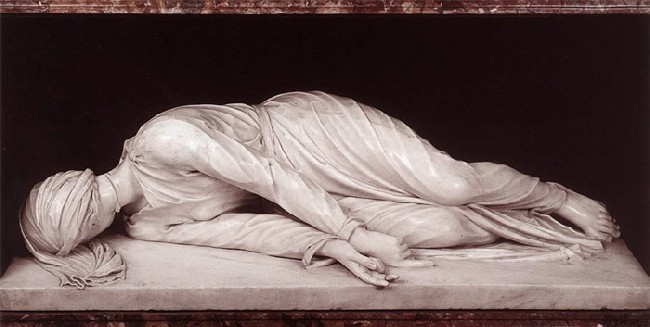
St. Scholastica
at Monte Cassino Abbey, Italy

[Click picture to enlarge]


A display case at St. Leo Abbey in Florida, USA, contains a small piece of block labeled “Monte Cassino.” The display case is in the main waiting area of the monastery and the piece of block is unique among the historical memorabilia that St. Leo Abbey has available to view.

I assume the piece of block was obtained after the USA’s WWII destruction of Monte Cassino — and I have been led to stop and remember the long history of all the Benedictines rebuilding monasteries all over Europe (and now the world) after invasions, fires, earthquakes, and government acquisitions. When you have been around since the dust was still in the air after the collapse of the Roman Empire, ora et labora (prayer and work) covers a lot of labora in 1,500 years.

Other than the name, Monte Cassino, the small irregular piece of block in the display case at St. Leo Abbey is not explained. Those familiar with history know the significance of this bit of rubble that is resting far from its origins and sacrifice, but I also know that many visitors who look into the display case do not know what they are looking at. They see, but do not understand. This always leads me to the frequent self-evaluation: I am the one who sees many pieces of art, sculptures, paintings, stained-glass windows, clothing, documents, artifacts, and carvings at St. Leo Abbey — and in the abbey’s Church of the Holy Cross — yet, I have no clue what many of them mean. And like that piece of Monte Cassino, I know those items have much to say — that is why someone thought they should be part of what we see when we visit the monastery — someone long ago thought I should know "just in case" so that everything is illuminated. I appreciate that. Being able to see with understanding is on my list!

______________________________

The picture is "Statuadi Santa Scolastica nel monastero di Montecassino," by Beatrix and is used subject to and may not be used except according to the Creative Commons Attribution ShareAlike 2.5 license, which is gratefully acknowledged.

Tuesday, March 24, 2009

Two Candles, One Light. A Benedictine oblate blog


I am reading “Saint John Cassian on Prayer," translated by A.M. Casiday for my Lenten reading.

Reading a book for Lent is an oblate practice borrowed from chapter 48 of the Rule, written for monks in monasteries by our Holy Father St. Benedict.

I read in my chair reserved for Benedictine prayer or reading books like “Saint John Cassian on Prayer."

A friend set up an entire prayer room in her house and that got me thinking that I could do a better job at making my prayer time more secluded from the world.

I use my prayer chair even though being an oblate has also made my “regular work time” much more a part of my “spiritual life.”

As an oblate, I see all my time as being devoted to God whether I am working or praying. On good days, the whole day seems consecrated to God — there is not one part for work and another part for spiritual contemplation.

I recognize that there is an apparent conflict in saying that my spiritual life is enhanced when I use my separate prayer chair and then also saying that my oblate practices merge the worldly and spiritual compartments of my life.

But from where I sit, either in my prayer chair or in front of my computer working, I can now see more clearly that there is no conflict and no separations.

___________________________

Picture is Candles by SeaN Rozekrans.

Saturday, March 7, 2009

Labora et labora. A Benedictine oblate blog


An often used phrase — almost a motto — of the Benedictine way is “Ora et Labora” (prayer and work).

While the term ora et labora is not used in the Rule of St. Benedict, the combination of prayer and work into a unified day that is consecrated to God was one of the ancient strengths of Benedictine monasticism after the collapse of the Roman Empire in 476 AD.

Distinctions are important, and at least some Benedictines cringe at the thought of putting “labora EST ora” (work is prayer) into the mouth of St. Benedict.(1)

But this past week for me has been “labora et labora.” Work and work. I know you have had weeks like that. Maybe your life is like that — and I know what that is like too — it's one of the reasons I am now a Benedictine oblate.

I am glad I have this weekend of rest. This past week of nonstop and late-night work proved the wisdom of St. Benedict — work needs its proper place — after ora.

__________________________

Footnotes:

Picture is Fatigue by Robert.

(1) Kardong’s 1995 article, “Work Is Prayer: Not!”


.

Saturday, December 20, 2008

Nothing’s new except seeking the old. A Benedictine oblate blog


I try to read a few pages in a monastic book each day, but I neglect this practice more often than I enjoy it.

After the morning office a few days ago I got my current monastic book(1) and opened it to where I stopped reading, but I got called away and it was not until late at night that I saw the book again, still there, opened and unread.

Happily, yesterday and today I was able to read several pages. The book is now summarizing the role of monasticism and particular monks in the Carolingian renaissance (about 790 AD to about 900 AD). That renaissance was brought about by Charlemagne’s efforts to bring order to the West.

Charlemagne “attacked disorder in every domain: doctrine, morality, worship, and monastic observance.”

In terms of the liturgy, Charlemagne wanted to restore the older liturgical practices and to accomplish that, “it was thought closer contact with Roman liturgy had to be renewed.” And to bring about such renewal, Charlemagne encouraged the study and learning of Latin. It was thought that if priests did not know Latin, they could not properly understand the “Sacred Scriptures.”

Monks served as major teachers of these renewing activities. Their works led to more learning, reading, and the spread of Latin.

The desire for renewal by the use of Latin in the liturgy is a discussion topic today (both pro and con) as a result of Pope Benedict XVI’s actions, but the 21st century is the not the first time a similar work has been started, it also happened in the 800s AD during the Carolingian renaissance and was moved ahead by monks who also took the Benedictine name.

These early works by Benedictine monks further solidified the monastic tradition in the West on its three pillars: sacred reading, liturgy, and work.

___________________________

Footnote:

The Love of Learning and The Desire for God: A Study of Monastic Culture, by Jean Leclercq

Sunday, December 14, 2008

A single ray continues, monastically. A Benedictine oblate blog


The last two blog posts were about St. Benedict and the shepherds who both saw the bright glory of the Lord in the night sky.

In addition to seeing the glory shine all around, St. Benedict also had a very monastic vision at the same time. He saw the entire world represented in a single ray of light. This event may have helped guide or confirm St. Benedict’s vision in the Rule of St. Benedict(1) of a Christian life that combines the material and spiritual into one life devoted to seeking God.

Benedictine monasticism for monks, nuns, and sisters is well known for its ordered, humane, yet deeply spiritual ways.

Ora et labora (prayer and work) — although the specific term is not used in the Rule of St. Benedict — is often used as the guiding principle of those living by the Rule — particularly oblates.

I hope I see all my ora et labora — all my world — in that single ray of light — that would be very Benedictine during this Advent.

_________________________

Footnote:

(1) St. Benedict’s Rule became the foundation of Western monasticism and that monasticism preserved and then was a major cause of the development of Europe. It has been said that other than the Bible, the Rule of St. Benedict has been the most important book for the development of Western civilization.

St. Benedict who saw the whole world during the dark nights of the collapse of the Roman Empire might be the perfect person to help rebuild and redevelop Europe in the light of Christ that combined prayer and work.

Saturday, November 8, 2008

Liturgy/Lectio is a window. A Benedictine oblate blog


Ora et Labora (prayer and work) is a well-known theme for the Benedictine balance in the lives of monks, nuns, and sisters. But that is exactly why I, as an oblate, also like Benedictine spirituality for my regular life in the world where I have a job, spouse, extended family, and bills like everyone else.

It is not so much that I want to be a secluded monk, but I want a deep spirituality in my regular, ordinary life. Oblate monasticism gives me that balance. And as you can tell, I have been thinking a lot about that lately.

I wrote in the previous blog post that the first word in the Rule of St. Benedict, “Listen,” is the recurring link in the cycle of prayer and work.

And there may be a more elemental way for me to see the Benedictine balance between my life of detachment in prayer and my life of attachment to this world in work.

Liturgical prayer and lectio divina serve as a window. On one side they open my spiritual life to God and on the other side they open the same spiritual life to this world.

Friday, November 7, 2008

Listening. A Benedictine oblate blog

[Click picture to enlarge]


The picture is of the version of the Rule I read and the beads were given to me by a very generous and kind oblate at the retreat held a few weeks ago.

Many editions of the Rule of St. Benedict have date notations so you can read through the Rule three times in a year. And in chapter 66 St. Benedict wrote that the Rule should be read to monks frequently. It is a practice that oblates also try to follow.

The Rule of St. Benedict begins with the word Listen, perhaps the most significant word in the Rule.

Certainly it is the word that immediately comes to mind when I think of the Rule.

Ora et labora (prayer and work) are the ideas (some would say the theme of the Benedictine life) that are often used to identify Benedictine practices. I think that “Listen” — the first call of the master in the Rule — is the recurring link between prayer and work in our daily lives. Visually, it might look like a strand of beads:

Listen — Pray — Listen — Work — Listen — Pray — Listen — Work