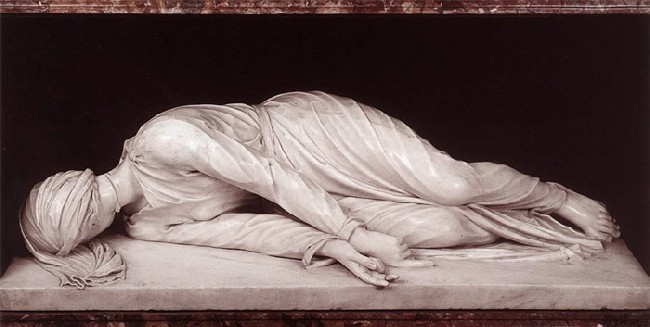
My Lent took a turn into more silence — my soul into contemplation of Jesus’ life — drawing everyone to him. For the past few days a peaceful meditation stays with me constantly.
I think my spirit was moved here after reading two readings from “Benedictine Daily Prayer — A Short Breviary” [link is to book publisher] for the Annunciation, March 25, and one reading for the fifth Sunday of Lent.(1)
My thoughts about Advent often were about hope. My thoughts about Lent are about mystery.
_________________________
Footnotes
The picture is "stillness" by Vanessa.
(1) The three readings mentioned in this blog are the following from “Benedictine Daily Prayer — A Short Breviary” (BDP)
FROM BDP, PAGE 1843
From the letters of Pope St. Leo the Great to Flavian,
The mystery of Our reconciliation.
Majesty humbled itself, power became weak, and eternity mortal. To pay the debt inherent in Our estate, the inviolable nature of God was united to Our passible nature so that, as Our healing required, the one Mediator between God and people, the man Jesus Christ, might be both subject to death because he was a man and yet free of death because he was God.
The true God was thus born a full and complete man, wholly divine and wholly human. By "human" we mean What the Creator made in the beginning and What he made his own in order to redeem it. Whatever the deceiver introduced into us and deceived humanity accepted, had no place in the Savior.
He shared our weaknesses but not Our sins. He took the status of a servant, therefore, but of a sinless one, exalting the humanity without lessening the divinity. For this self-emptying in which the invisible One became visible and the Creator and Lord of all things willed to become a mortal creature was the stooping of pity, not the failing of power. Thus he who as God created humanity became a man himself in the form of a servant.
The Son of God enters Our lowly world, descending from his heavenly throne but not putting off the glory that he has from the Father. He is reborn in a new way — new, as man; though incomprehensible, he willed to be comprehended; existing before all time, he began to exist in time; the Lord of the universe hid his majesty and took the estate of a servant; the impassible God did not disdain to become a suffering man, and though immortal, to subject himself to the law of death.
He who is true God is also truly a man, and in this unity there is no illusion, lowly though human is and lofty the Godhead.
For as God is not changed when he takes pity, neither is the human nature absorbed by the divinity. Each nature does, in communion with the other, what is proper to it: the Word does what belongs to him as Word, and the flesh what belongs to it as flesh.
FROM BDP, PAGE 1844
READING I Second Option
From a Sermon on the Nativity of the Lord by St. Odilo of Cluny
I came forth from the mouth of the Most High, as the firstborn before all creation. He who spoke through Solomon, saying: I came forth from the mouth of the Most High, as the firstborn before all creation; and again, The Lord possessed me when his purpose first unfolded, before the earliest of his works; from everlasting I was firmly established; he who said through Isaiah: Do I not fill heaven and earth? — he it is who, in the mysterious plan of his own providence, took flesh in the womb of the blessed Virgin Mary.
While Solomon's words teach us that Christ was eternally in existence before the world began, Isaiah's declare that there is no place in the whole of creation from which he is absent. And if he exists always and everywhere, he cannot be absent from ourselves. The testimony of the ancient prophets to Christ's eternal being and his boundless divine presence is indeed trustworthy and true, and is confirmed by the resounding call of that inspired heavenly trumpet: Jesus Christ, yesterday and today, the same forever. Our Savior himself tells the Jews in the gospel: Before Abraham ever existed, I am.
With God the Father from all eternity, before Abraham existed (more accurately, before anything existed) he had his eternal being; and yet he chose to be born in time from the stock of Abraham — Abraham who was told by God the Father: In your posterity all the peoples of the earth will be blessed.
The blessed patriarch David was also granted the sublime privilege of a similar promise. Revealing to him the hidden secrets of his wisdom, God the Father told him: The fruit of your body I will set upon your throne. These two received the promise of the Savior's coming more plainly than any of our other forebears, and so they deserved to be given the first and most important place in the records of our Lord's ancestry according to the evangelist Matthew, the opening words of whose gospel are: The genealogy of Jesus Christ, the son of David, the son of Abraham. With these sacred words of the evangelist both the prophetic oracles and the apostolic
preaching are in accord. It is evident that when the prophet Isaiah said in the person of God the Father: And so, Israel my servant, Jacob whom I have chosen, the seed of Abraham my friend in whom I took possession of you, his message was that the mediator between God and humankind would be born according to the flesh from the stock of Abraham.
The man in the gospel who was freed from the darkness of ignorance and enlightened by faith addressed God's Son as Son of David. Not only did he receive spiritual insight, but he also deserved to have his bodily sight restored. Christ the Lord desires to be called by his name, knowing that there is no other name by which the world can be saved. And if we ourselves wish to be saved by him who is the one and only Savior, each of us must also say to him: Lord, son of David, have mercy on us. Amen.
FROM BDP, PAGE 177
Fifth Sunday of Lent
READING I Tract 49
From the Homilies on John by St. Augustine
If all things were made by him, what wonder is it that one was raised by him? Among all the miracles performed by our Lord Jesus Christ, the resurrection of Lazarus holds a foremost place in preaching. But if we consider attentively who did it, our duty is to rejoice rather than to wonder. A man was raised up by Him who made humanity: for he is the only One of the Father, by whom, as you know, all things were made. And if all things were made by him, what wonder is it that one was raised by him, when so many are daily brought into the world by his power? It is a greater deed to create people than to raise them again from the dead. Yet he chose both to create and to raise again; to create all, to resuscitate some.
You have just heard that the Lord Jesus raised a dead man to life; and that is sufficient to let you know that, were he so pleased, he might raise all the dead to life. And, indeed, this very work he has reserved in his own hands till the end of the world.
For while you have heard that by a great miracle he raised one from the tomb who had been dead four days, "the hour is coming:' as he himself says, "in which all who are in graves shall hear his voice, and shall come out of them." He raised one who was putrid, and yet in that putrid carcass there was still the form of limbs. At the last day he will by a word reconstitute ashes into human flesh.
It was, however, necessary then to do only some such deeds, in order that we, receiving them as tokens of his power, may put our trust in him, and prepare for that resurrection which shall be to life and not to judgment. So, indeed, he says, "The hour is coming, in which all who are in graves shall hear his voice, and shall come out of them; those who have done good, unto the resurrection of life; and those who have done evil, unto the resurrection of condemnation."
Tuesday, March 31, 2009
Stillness of Mystery. A Benedictine oblate blog


Sunday, December 14, 2008
A single ray continues, monastically. A Benedictine oblate blog

The last two blog posts were about St. Benedict and the shepherds who both saw the bright glory of the Lord in the night sky.
In addition to seeing the glory shine all around, St. Benedict also had a very monastic vision at the same time. He saw the entire world represented in a single ray of light. This event may have helped guide or confirm St. Benedict’s vision in the Rule of St. Benedict(1) of a Christian life that combines the material and spiritual into one life devoted to seeking God.
Benedictine monasticism for monks, nuns, and sisters is well known for its ordered, humane, yet deeply spiritual ways.
Ora et labora (prayer and work) — although the specific term is not used in the Rule of St. Benedict — is often used as the guiding principle of those living by the Rule — particularly oblates.
I hope I see all my ora et labora — all my world — in that single ray of light — that would be very Benedictine during this Advent.
_________________________
Footnote:
(1) St. Benedict’s Rule became the foundation of Western monasticism and that monasticism preserved and then was a major cause of the development of Europe. It has been said that other than the Bible, the Rule of St. Benedict has been the most important book for the development of Western civilization.
St. Benedict who saw the whole world during the dark nights of the collapse of the Roman Empire might be the perfect person to help rebuild and redevelop Europe in the light of Christ that combined prayer and work.
Saturday, December 13, 2008
St. Benedict & the Shepherds. A Benedictine oblate blog

When Jesus was born shepherds living in the fields and keeping the night watch over their flocks saw the glory of the Lord. The angel of the Lord appeared to them and the glory of the Lord shone all around.
About 500 years later, the mighty empire that crucified that glory was dying and could not keep a candle lit in Rome, while Jesus continued to give new birth in everlasting light.
St. Benedict was born into the darkness of the collapsing Roman Empire, but like the earlier shepherds, he too saw the glory of the Lord one night - the light filled the entire sky like the day. Then immediately, St. Benedict also saw the whole world represented in a single ray of light.
The earlier shepherds were afraid when they first saw the glory of the Lord, St. Benedict was not. St. Benedict wrote in Chapter 7 of the Rule on the illumination of love:
"Having climbed all these steps of humility,
therefore, the monk will presently come to that
perfect love of God which casts out fear."
In lectio divina and silence my wife and I prepare to celebrate Christ's light during this Advent. We pray to see the world only by Christ's singular light and to praise his glory with all our love.
Thursday, December 11, 2008
The world in a ray of Light. A Benedictine oblate blog

The Rule of St. Benedict does not mention Advent, but the Life of St. Benedict, by St. Gregory the Great gives this account of St. Benedict when he saw the whole world in a single ray of light:
"CHAPTER 35
"How the whole world was represented before his eyes:
"Another time, Servandus, Deacon and Abbot of that Monastery which was built by Liberius, sometime a senator, in the Campania, used often to visit him, for being also illuminated with grace and heavenly doctrine, he repaired divers times to the Monastery that they might mutually communicate one to another, and, at least with sighs and longing desires, taste of that sweet food of the celestial country whose perfect fruition they were not as yet permitted to enjoy. When it was time to go to rest, venerable Benedict went up to the top of the tower in the lower part of which servandus the Deacon had his lodging, and from which there was an open passage to ascend to the higher. Over against the said tower was a large building in which the disciples of both reposed. While as yet the Monks were at rest, the man of God, Benedict, being diligent in watching, rose up before the night office and stood at the window making his prayer to Almighty God about midnight, when suddenly, looking forth, he was a light glancing from above, so bright and resplendent that it not only dispersed the darkness of the night, but shined more clear than the day itself. Upon this sight a marvelous strange thing followed, for, as he afterwards related, the whole world, compacted as it were together, was represented to his eyes in one ray of light."
_______________________________
Picture Credit:
APOTD, May 1, 2003
The Energetic Jet from Centaurus A
Credit: M. J. Hardcastle (Univ. Bristol), et al.
X-ray; Chandra Observatory, NASA / Radio; NRAO, VLA
Tuesday, December 9, 2008
Good News, it’s really dark. A Benedictine oblate blog

November is the month in the liturgical year to remember the dead — to remember those whose life on earth is complete. November ends the liturgical year. Advent start the year. But Advent has increasing darkness until the light of Christ appears. It is Advent’s growing darkness that has occupied me recently.
Advent’s darkness is good because it further separates us from the former year, our former lives.
As that old life ends, and for those seeking to put off the old self in a new day, this is good news, a good night. Advent’s darkness moves us day by day away from the past year.
"As an Oblate" blog reminds us that: “Advent is a good time for those who have been away from the Church to return.” Even though they may have traveled through the night, they return just in time for the start of a new day, in a new light.
And the Monastic Skete blog reminds us that we can see farther in darkness than during the daytime. If we want to find the same destinations that occupied us in the old year, we can use the world’s light, but if we seek the most distant horizon, we will want to look farther in the darkest nights in December.
There is another aspect of this time of year. Advent’s darkness is a canvas of life — none of the light is from us. Our own light does not matter, and we are shown this during Advent. Our light slips away. It is against this backdrop that Christ’s light appears.
With Advent’s darkness also comes the cold. On a soul’s dark night and because we wear Advent’s heavy cloak, we come to know that only Christ’s love can warm us. The Abbey of the Arts blog also celebrates the source of our light.
The long nights of Advent are best for the night office of vigils prayed by all who pray the divine office, the liturgy of the hours. Stillness is best for lectio divina in the dead of night — a time that amplifies God’s quiet speaking.
While thinking about Advent’s darkness, I read Amy’s poem, “Illumination,” at A Square Peg Breaks Free blog. The poem elegantly describes our relation to darkness and light.
Amy’s poem ends (is completed) with Hope. Everyone has lived in nights of grief and dark hardships, Advent promises to complete those nights in Hope.
Hope is there from the first day of Advent. It may seem odd that the new liturgical year begins while the nights are still getting longer. The new liturgical year begins with Advent, not Christmas or January 1.
The new liturgical year does not avoid the growing darkness. The calendar does not pick a first day for Advent that has the long nights left behind in the old year. It is precisely by and in Advent’s darkness that we are carried to the new light. Counting the days of growing darkness is also counting the days getting closer to our eternal Hope.
Advent’s darkness allows us to starkly separate ourselves from the old self. Advent’s long nights allow us to see farther to a new point of light. Advent is the best backdrop for the new light of Christ. Advent’s cloak proves our need to be wrapped in Christ’s love. Advent begins with Hope. We arrive at the manger when the shepherds do, at night. That’s good.
____________________________
Picture source:
APOTD July 7, 1999 M80: A Dense Globular Cluster
Credit: F. R. Ferraro (ESO /Bologna Obs.), M. Shara (STSci /AMNH) et al.,
& the Hubble Heritage Team (AURA/ STScI/ NASA)
REVISED:
December 10, 2008 to add link and comment about "As an Oblate" blog.
Thursday, December 4, 2008
Life as Advent. A Benedictine oblate blog

[Click picture to enlarge]
My wife and I are new to the Catholic church and we are one-year-old oblates at a Benedictine monastery in Florida.
Advent is a new, important time for us. What exactly is happening with Advent? We are just beginning to understand its depth and scope.
But Advent did not take us by surprise this year because we were alert enough to grasp that in November we were coming to the end of the liturgical year (my blog on the subject) and the beginning of a new one (no more waiting for a dropping crystal ball).
When we were on our retreat last month at the abbey we bought a tall candle. We also bought a $1.00 little sheet giving suggested Bible readings during Advent. My wife suggested that we light the candle and read the story of Jesus’ birth, read the suggested verses from the little Advent sheet, and then have a meditation in silence.
Each day in the evening, we read the appropriate passages from the Bible after lighting our tall candle. My wife also reads a section or two from the Catechism. She discovered that the Catechism has a large amount of material on Advent — who knew?
After the readings are finished we pray and meditate in silence.
That’s our new Advent practice. We like it.
In my study times, I have been learning more about Advent. The most interesting thought I came across today is that we might see our whole lives on earth as an Advent to eternal life with Christ. The passing from our darkness into his light.
Maybe that idea had extra meaning to me because of this wonderful quote on Plain Catholic’s blog:
“Death is not extinguishing the light. It is putting out the lamp because the dawn has come.” Tagore
___________________________________
Picture:
From the APOTD, November 30, 2008 (also the start of Advent this year).
Apollo 15, launched July 26, 1971. David Scott looks at a large moon rock. The top of the 11,000-foot Mt. Hadley Delta is ahead of him.
.


 Posts
Posts