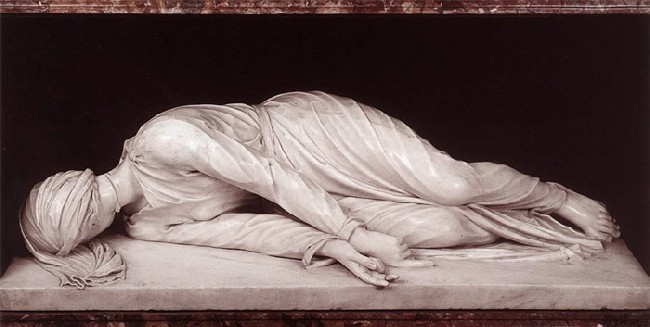
What prayer does to raise the mind and heart to God, the Rule of St. Benedict does for the life on its journey to dwell with God.__________________________
Footnotes:
Picture is 08080012.jpg by lb6364 and is used subject to license.
What prayer does to raise the mind and heart to God, the Rule of St. Benedict does for the life on its journey to dwell with God.__________________________

On June 21, 2009, Pope Benedict XVI made an interesting comment on the relationship between prayer and good works. I thought the Pope’s comment helped clarify how prayer empowers working in the world. In my extension of the Pope’s idea, I can see how the Pope’s words could also mean that the contemplative life does not create an “either/or” separation with an active life of service.
Listening to Jesus Christ and seeking God are the best fuel for work.
Pope Benedict XVI made his comments in the homily for the Mass celebrated in front of the church of St. Pio of Pietrelcina(1) in Italy.
The Pope spoke about St. Pio's work to relieve suffering of the sick:
"In the first place came prayer. ... His days were a living Rosary, a continuous meditation upon, and assimilation of, the mysteries of Christ, in spiritual union with the Virgin Mary. This explains the unique simultaneous presence in him of supernatural gifts and of concrete human qualities. And the culmination of everything came in the celebration of Mass. ... From prayer, as from an endless font, arose charity. The love he carried in his heart and transmitted to others was full of tenderness, ever attentive to the real situations in which individuals and families lived. Towards the sick and suffering he nourished the predilection of the Heart of Christ, and it was from here that the idea for a great social project dedicated to the 'relief of suffering' was born and took shape. We cannot adequately interpret or understand this institution if we separate it from the source that inspired it: evangelical charity animated ... by prayer.__________________________
“Yet ‘the risks of activism and secularization are ever present’, warned Benedict XVI. ‘Many of you, religious and lay people, are so absorbed by your many obligations in serving pilgrims or the sick in hospital, that you run the risk of neglecting what is truly important: listening to Christ and accomplishing the will of God. When you realize that you are close to running this risk look to Padre Pio, to his example, to his sufferings, and invoke his intercession that he may obtain from the Lord the light and strength you need to continue his mission, imbued with love for God and fraternal charity.’” emphasis supplied
From PV-ITALY/MASS/SAN GIOVANNI ROTONDO VIS 090622 (630)

Ora et Labora (prayer and work) is a well-known theme for the Benedictine balance in the lives of monks, nuns, and sisters. But that is exactly why I, as an oblate, also like Benedictine spirituality for my regular life in the world where I have a job, spouse, extended family, and bills like everyone else.
It is not so much that I want to be a secluded monk, but I want a deep spirituality in my regular, ordinary life. Oblate monasticism gives me that balance. And as you can tell, I have been thinking a lot about that lately.
I wrote in the previous blog post that the first word in the Rule of St. Benedict, “Listen,” is the recurring link in the cycle of prayer and work.
And there may be a more elemental way for me to see the Benedictine balance between my life of detachment in prayer and my life of attachment to this world in work.
Liturgical prayer and lectio divina serve as a window. On one side they open my spiritual life to God and on the other side they open the same spiritual life to this world.


I recently had one of those moments when what I “knew” about monasticism was changed into what I “understood” about monasticism.
I have always known that secluded monks pray often throughout the day. But after reading "Saint John Cassian on Prayer" and "The Benedictines," by Dom David Knowles, it became clearer to me, a flash of understanding — monks do not go into the desert primarily so they can be alone, they go to be alone so they can “pray without ceasing.”
Praying without ceasing is the charge by Paul in I Thessalonians 5:17. The heart of monasticism is living to fulfill that command.
Saint John Cassian wrote, “The whole purpose of the monk and perfection of his heart tends toward continual and uninterrupted perseverance in prayer.” 1
Origen wrote, “He prayers ‘without ceasing’ who unites prayer to the necessary deeds and fitting actions to prayer, since virtuous deeds or fulfilling the commandments are included as a part of prayer; for we can only accept the command to ‘pray without ceasing’ as meaning something possible if we mean that the saint’s whole life taken together is one great prayer.” 2
Dom David Knowles wrote about the monk, “He must realize that as a monk he owes this praise to God as his day's piece-work, and that apart from exceptional circumstances it is not a question whether missionary or teacher or student serves God better than he does. This prayer, liturgical and contemplative, is what God wants of him as a Benedictine monk, the peculiar talent that is his, the special jewel which Benedictines pay into the treasury of the Church.”3
This truth about monasticism — a life of prayer — rather than a life as a hermit — helps explain why oblates have always been a part of the larger monastic community and why in the 21st century the number of Benedictine oblates is increasing rapidly.
Many people are seeking a life of deeper spirituality and they are finding it in an expanded and structured life of praying the Psalms as part of the daily Divine Office.
******
FOOTNOTES
1. Page 11, "Saint John Cassian on Prayer," translated by A.M. Casiday
2."Saint John Cassian on Prayer," footnote 25
3. Page 46, "The Benedictines," A Digest for Moderns
By Dom David Knowles
Monk of Downside Abbey
Introduction by Marion R. Bowman, O.S.B.
Abbot of Saint Leo Abbey
The Abbey Press, Saint Leo, Florida 1962
Here is an incomplete, online version of this classic work.
.


 Posts
All Comments
Posts
All Comments