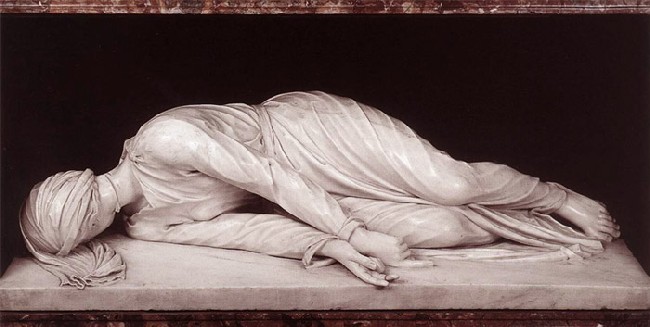
Wil Derkse writes: "Presently my abbey, after spring, summer, and fall, appears to be in its winter season, though there are the first signs of spring. Such a winter season appears worse than it is. Winter is also a respectable season, in which germs are kept which quietly survive for the spring which follows, which will be different from the previous. It is like that old Irish custom which is called grieshog, where at the end of each day a few glowing coals are hidden under a layer of ashes. When the night is over, the coals may be uncovered to kindle a new fire. To continue with this metaphor: those who would, as an outsider, meet the small and largely gray little company of abbey dwellers for the first time, might think: a lot of ashes here. But I know that there are glowing coals under the ashes. I know because each time, also in winter, I am "turned on" every time and I am certainly not the only one. There are even a few signals that the glowing coals under the ashes have ignited others to such an extent that they wish, as monks, to pass on the fire."
Above quote from:
"The Rule of Benedict for Beginners," by Wil Derkse, Liturgical Press, 2003
Friday, May 30, 2008
Passing on the Fire


Tuesday, May 27, 2008
Ordinary Time - Definition

I used to wonder about why some parts of the calendar are called ordinary time. Ordinary Time gets its name from the word ordinal, meaning "numbered," because the Sundays of Ordinary Time are designated numerically.
Sunday, May 25, 2008
Calendar Comfort for Oblates
I feel better knowing what day it is. When I have been very busy or very inactive, I sometimes forget to keep track of both the day and day of the week. Is this the 8 or 9, and is it Monday or Tuesday?
Knowing where I am in the Church calendar and within each days’ Divine Office gives me a fuller sense of that same satisfaction that comes from knowing what day it is.
Knowing that a time is, for example, the eighth Sunday of the year, in Psalm week 4, and Sunday cycle A, that it is ordinary time, and it is time for Vigils keeps me close to the life of Christ revealed anew each year. My calendar is not set to a number, it is set to a life.
And of course, within a day this might not only 2:00 pm, but it will also be None too soon. ;)

Thursday, May 22, 2008
Find Beauty and Silence

I am just like everyone else, I enjoy God’s beauty. In the first picture, I am writing a blog at one of the many pretty spots at Historic Bok Sanctuary, in Lake Wales, Florida. 
For praying the Liturgy of the Hours (also called the Divine Office, or Opus Dei — work of God), I like a place a little distance away from most visitors.
Wednesday, May 21, 2008
Vatican Splendors Exhibition Cleveland, Ohio, and St. Paul, MN.
The Vatican Splendors exhibition will be at:
Western Reserve Historical Society in Cleveland, Ohio
beginning May 31, 2008, and
Minnesota History Center in St. Paul
beginning September 27, 2008.
“Experience 2,000 years of Vatican art and history — Michelangelo, Bernini, Giotto, and others. Artwork dating back to the third century. This exhibit comprises one of the largest Vatican collections ever to tour North America. Many items have never before been on public view.”
Vatican Splendors web site.
My wife and I went to see Vatican Splendors when it came to Florida. It is wonderful — just like the description. We were there about 2 and half hours.
You walk through the exhibition with an audio device giving a general overview of the major sections of the exhibit. Each piece in the exhibition, however, has its own written description on a display card on the wall. The Vatican Splendors’ written explanations/descriptions were particularly well done. With adjoining items, the written display cards often tell a little story. So, this is not 2.5 hours of only reading, “Baroque painting 17th century ” — we did not see 200 separate ancient items, but we traveled along a time path with interesting stops along the way and read about their place in the history of the Vatican.
For example, I learned that the name Vatican was simply the Roman name of that particular hill. When the Christians began praying there, they called it what it was. They and everyone in Rome called it Vatican hill, and not as I had guessed because it was a Latin word for some Roman Catholic function.
In the remainder of 2008, Vatican Splendors will be in Cleveland and then in St. Paul, MN.
We have been to two other similar exhibitions when they came to Florida. One was on the close Jewish connection of the earliest churches and the other was on the written transmission of the Bible.
I often have images from those two exhibitions: “Cradle of Christianity” and “Ink and Blood” come to mind whenever I think about those topics and times. I am sure it will be the same for the Vatican Splendors. Vatican Splendors had a small 2-inch square chunk of rock taken from a wall near Peter’s tomb. Written on the block is: “Peter is here.” Every time I think of St. Peter’s Basilica, that tiny carving comes to mind.
Here are the other exhibitions' web sites -- I think they are not touring now, but the web sites are good resources:
Ink and Blood web site
Cradle of Christianity — The Israel Museum
If you have the opportunity go see Vatican Splendors. An oblate's thumbs up for Vatican Splendors.
Tuesday, May 20, 2008
Oblate Monasticism — One Life, not two

Wil Derkse writes that the Benedictine life joins the sacred and profane life at the abbey. Nothing I have experienced captures this goal of the Christian living as does the Rule of St. Benedict applied in the life of the lay person — a person like me who is not a monk and who does not live at an abbey.
The Rule of St. Benedict became the most widely used rule for monks during the past 1,500 years because it does not seek flights of super spirituality or harsh solitudes away from the world. Rather, the Rule has been astonishingly effective because of how the ordinary is sanctified as part of the world.
For me, in my chair reserved for prayer, the Divine Office is a very effective way of joining prayer to my hours of work.
With typical Benedictine balance, one of Derkse’s example is the following Zen encouragement: “Before the enlightenment: cut wood and draw water; after the enlightenment: cut wood and draw water.”
"The Rule of Benedict for Beginners," by, Liturgical Press, 2003, page viii.
Sunday, May 18, 2008
Divine Office -- Structure of Beauty - Benedictine Oblate
 The Divine Office helps structure my day of work and evenings of more work — yes, just like your day.
I often hear Protestants who come to the Catholic monastery near my home and begin praying the Divine Office say they like the structure of this manner of prayer common among the earliest first-century Christian communities.
I agree and I think it is the Divine Office’s beauty and antiquity that creates the structure in my heart. The beauty of the Divine Office sets it apart in my mind as a means of devotion.
Others, of course, will find none of the forms of the Divine Office to fit their spirit — that’s OK. Don’t force your life into a practice for which it is not suited.
For those who enjoy the Divine Office, they say its practices are flexible and supporting of a busy lifestyle — not an extra burden.
Wil Derkse writes, “opportunities for the improvement of quality are often the first we let go when we become busy and important: silence and recreation are eliminated as a matter of course; we become noisy and turbulent and with our unrest we affect others. The Benedictine attitude is precisely the reverse. Those who receive extra responsibility need to listen more, like the brother who became prior and then doubled his time for daily meditation.”
The above quote is from "The Rule of Benedict for Beginners," by Wil Derkse, Liturgical Press, 2003.
If you are just beginning to explore Benedictine monasticism, I recommend here the above book as a first book you might read. Its 87 easy-to-read pages give a good overview of oblate monasticism -- defined here on the Oblate Spring web site.
Thursday, May 15, 2008
A Monastic Garden for Benedictine Oblate -- Part 2
In the blog, “A Monastic Garden,” I wrote about how it is hard to relax in my own backyard garden — because I see what needs to be done rather than peace the garden was intended to create.
For me, the best solution is to avoid places (for the Divine Office) that are most often places of work (like our garden) and to have a place in the house that is dedicated primarily as a place of prayer — in my case it’s a comfortable brown chair and footstool in a corner of my home office. Some oblates have a separate prayer or reading room.
For me, lighting a candle helps move me from being in work to being present in prayer. If you have a practice that helps you move into a time of prayer or that helps your prayer time — please add it as a comment -- Thank you. If it includes eating ice cream, I just might try it! :)

Monday, May 12, 2008
"God Bless You."

I recall what happened in the parking lot as I was getting ready to drive home after my first visit to a monastery — I was putting my camera and hat into the back of the car, a man in his 30s spoke to me as he unlocked his car which was next to mine. He said, "I have been on a retreat here. These monks pray five times a day. When people hear that a group prays five times a day, it is typically not a Christian group that first comes to mind, but it should be because this Benedictine tradition goes back 1,500 years, it is very old. Is this your first time here?" Yes, I said, and he replied, "God bless you."
This blessing from a stranger is one of the treasures I received from the monastery.


 Posts