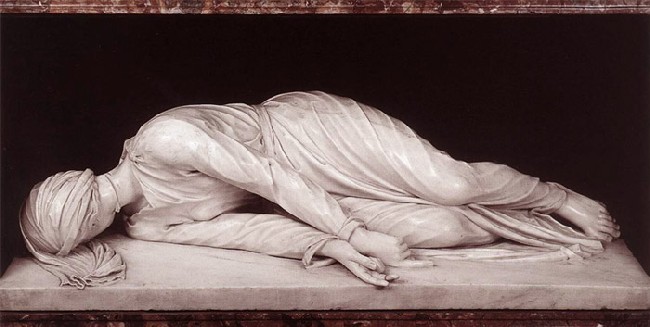
Early this morning after vigils, I made my morning rounds of visiting web sites, blogs, message board, online Catholic forums (fora for you purists), somewhere I came across a link to Crescat, a beautiful blog.
The art is wonderful, the text informative, and the sidebars are amusing. It is a comprehensive blog and resource.
Saturday, August 16, 2008
Crescat, a beautiful blog.


Thursday, August 14, 2008
Oblate Sunday, Part 2 of 4. A Benedictine oblate blog.

Part 1 is Here.
It refreshes my spirit just to see the other oblates at oblate Sunday at the abbey. Sometimes because of our schedules, I have not seen them in months.
But of course it is not just seeing the other oblates that is an encouragement to me — it is talking with them about what is happening in their lives. It is easy to talk with other oblates because of our common monastic-based practices and interests in Benedictine monasticism.
In Part 1 of this blog, I wrote that oblate Sundays gave me a sense of being part of an old tradition. But from knowing the other oblates, I also have the sense of movement into the future.
Blessings to all oblates, thank you.
Monday, August 11, 2008
The Crafty Oblate. A Benedictine Oblate blog.

[Revised Aug. 13, 2008 11:20 to reformat the material]
This blog is about a common practice among oblates — personalizing the books and materials we read for the Divine Office. This blog is about my recent project to replace card-stock section dividers I made for the book Benedictine Daily Prayer. See the footnotes for background information.
Anyone who is familiar with the book Benedictine Daily Prayer will tell you — often with a groan and a little smile — that if you use this book and similar books, there is a lot of flipping back and forth between sections. BDP does not have all the material needed for each day in one place. If it did, the book would be several volumes instead of one handy volume.
BDP comes with ribbons, but I found them difficult (I could never remember what section each color represented).
I eventually decided that ribbons did not work for me and I needed a better solution.
I tried some stick-on tabs, but while that helped find the various sections of the book, I still needed movable dividers.
About a year ago I made a set of 12 card-stock dividers with tabs. I typed particular Psalms or antiphons on some of the dividers. I loved the way it made finding things so much easier.
Through time, the card-stock tabs became worn and recently I replaced the 12 dividers I made a year ago and even added four new dividers for new texts or sections. The new-improved version of dividers still uses card stock, but now I use tabs from Tabbies. I use an ultra-thin Sharpe permanent colored marker to write the name of the section on the Tabbies. I use Tabbies all the time in my work, but originally thought Tabbies would be too big and bulky, but recently my wife suggested using plastic tabs. She was right.
So, the Benedictine Daily Prayer I use has been spiffed up with some new section dividers that will make it easier for me to have the text I read at hand with less flipping.
I felt downright monkish as I took card-stock, scissors, a ruler, pencil, and made the new hand-made dividers with often-read material. OK, I also used the computer to type the text. But if there were computers in the middle ages, I am sure every monk would have had one too.
_____________________________________
Footnote 1
Benedictine Daily Prayer is a breviary — a book of prayers for daily use. The prayers are primarily the Psalms and Hymns and Bible readings placed in a structure based on ancient monastic traditions.
Another book I use is the very user friendly (no flipping) "Benedictine Weekly Psalter," by Scott Knitter (who has a liturgy blog). Scott's book has the Psalms and canticles in daily order — it is wonderful companion to the BDP because BDP does not use all the Psalms.
Benedictine Daily Prayer is in the tradition of previous books published by monasteries (in this case St. John’s Abbey, Collegeville, Minnesota) “which sought to provide the English-speaking world an unofficial ...edition of the Divine Office for those who sought to pray with the Church in a more simplified manner.”
You can see the Table of Contents and some of Biblical readings in BDP at AmazonOnline Reader. Thank you Amazon.com
Here is an overview and example of a Divine Office. In Footnote 2 is a brief history of the Divine Office and why it is prayed. Its roots go back about 3,000 years.
Footnote 2:
“The custom of reciting prayers at certain hours of the day or night goes back to the Jews, from whom Christians have borrowed it. In the Psalms we find expressions like: "I will meditate on thee in the morning"; "I rose at midnight to give praise to thee"; "Evening and morning, and at noon I will speak and declare: and he shall hear my voice"; "Seven times a day I have given praise to thee"; etc. (Cf. "Jewish Encyclopedia", X, 164-171, s. v. [see article on "Prayer in the Jewish Encyclopedia" and the paragraph heading Number of Prayers in that article]). The Apostles observed the Jewish custom of praying at midnight, terce, sext, none (Acts 10:3, 9; 16:25; etc.). The Christian prayer of that time consisted of almost the same elements as the Jewish: recital or chanting of psalms, reading of the Old Testament, to which was soon added reading of the Gospels, Acts, and Epistles, and at times canticles composed or improvised by the assistants.”
Above material is from the classic 1917 Catholic Encyclopedia in the article on the Divine Office.
Friday, August 8, 2008
Oblate Sunday, Part 1 of 4. A Benedictine oblate blog.

The monthly oblate meeting was this past Sunday at the abbey.
My wife and I had our 1-year-old grandson stay with us on Saturday night and we were not able to get up Sunday morning after a late night with him not wanting to go to sleep, drop him off at his parent’s house in the morning, and drive the 45 minutes to the abbey by 10:00 am — but we should have.
The sequence of events at the abbey on oblate Sundays is:
1. Mass at 10:00 am
2. Oblate novice class at 11:15 am
3. Midday prayer with the monks at about noon.
4. Lunch
5. Oblate class 1:30 pm to about 3:00 pm
These times may not be exact, I do not pay any attention to the time while there, I arrive and move with everyone to each next event.
[Bookstore browsing 3:00 pm to 4:00 pm — this is not part of the planned activities, but many people like to spend time after the oblate meetings looking through the well-supplied book and gift shop at the abbey — often we will hear of a new book in class and want to buy it.]
Most everyone leaves for home between 3:30 pm and 5:30pm.
On most oblate Sundays my wife and I usually stay for vespers at 5:00 pm, because we typically are in the abbey bookstore until it closes at 4:00 pm and we walk the abbey grounds or sit in the front of the church until about 4:40 pm when we go into the church to prepare for prayers at 5:00 pm. So, for us we are usually heading home at 5:30 pm on oblate Sundays.
However, last Sunday we left the abbey to come back home at about 3:45 pm because we were very tired and when we got home we went to bed about 8:30 pm — and we are night owls by nature.
So that's the typical schedule. I included it for those who might not have any idea about the overall structure of an oblate Sunday -- at least at the abbey we know.
One of the primary feelings I have on oblate Sundays is the sense of being part of an old tradition. While memory is a friend to many religious institutions, memory is the guestmaster of monasticism.
Tuesday, August 5, 2008
Odd things happen when least expected. A Benedictine oblate blog.

I have written in the past about spending time alone in the abbey church before the monks come in for the Divine Office.
Oddly enough, the few unusual things I have experienced in church happen in those alone times before the Divine Office — in that time of preparation — not during the mass or the Divine Office.
For example, I remember one afternoon before 5:00 pm Vespers (part of the daily Divine Office), when I had a fraction-of-a-second, but very strong sense that several of the saints were present. I know that others have similar experiences, but I thought such encounters were most often the results of prayer — not part of what prepares one’s mind for prayer. Regardless of whether my relaxing mind missed a shift and went into the wrong gear for a second, reading and rereading “Saint John Cassian on Prayer” has caused prayer-preparation to be on my mind for some time now — no matter who else is around!
Saturday, August 2, 2008
Yes, YouToo can watch YouTube. A Benedictine oblate blog.
This is my first try at including a video. If this works you are watching Monte Cassino, the most famous Benedictine monastery. It was founded by St. Benedict in about 529 AD.
In its 1,479-year history, Monte Cassino Abbey has been destroyed three times by armies, including the 1944 bombing by the Allies during the World War II Battle of Monte Cassino. [The decision of the allies to bomb Monte Cassino is controversial to this day.]
The Abbey was rebuilt by the Italian government and consecrated by Pope Paul VI in 1964.
While at Monte Cassino Abbey, in about 530 AD Benedict wrote and compiled the Rule. Its influence spread over all Western monasticism and it has been said that the Rule written at this abbey -- other than the Bible -- has been the most important book for the development of Western civilization.
When I say prayers today, it will include a remembrance of the many monks known only to God who have lived quietly within its walls — but who never let the fire go out.
“May the divine assistance remain with us always,
And with our absent brothers.
Amen”
Friday, August 1, 2008
Cassian — from the desert to the Internet. A Benedictine oblate blog.
I appreciate John Cassian’s simplicity and his linking of ideas which later were woven into the Rule of St. Benedict.
The monastic life is to be prepared for prayer. This is key because the monk’s or oblate's life is structured to promote prayer without ceasing.
Prayer without ceasing is a foundational part of what monasticism is all about.
As a Benedictine oblate who lives in the world and has a full time job, the Rule of St. Benedict and the Divine Office provide that structure for me. Others rightly will find a different spirit or charism in the Church for them — a way other than oblate monasticism — it is a big Church.
But Cassian set out to bring the monasticism of the earliest Egyptian desert fathers to the West — he succeeded very well and I am now blogging about it on the Internet.
Monday, July 28, 2008
How I enter prayer is how I pray. A Benedictine oblate blog.

I have been thinking and writing about silence a lot because I have been reading "Saint John Cassian on Prayer" and because I have had some times away from home in complete silence. I highly recommend both activities. (As an aside, I feel more rested than I have in over four years. It’s bad for the spiritual life to be bone weary and drained of energy for long periods of time. Note to self — don’t let this happen again. It really is true that many problems are solved just by getting enough rest.)
OK, back on track in this blog.... I understand better why preparation for prayer is essential and why it is an important monastic principle.
Saint John Cassian wrote:
"... [W]e need to prepare ourselves before the time for prayer to be as we would wish to be found when we pray, since the mind is shaped in its petitions by its previous state. As we bend ourselves to pray, images of the same deeds or words or thoughts in keeping with our previous condition will dance before our eyes to anger us, or sadden us, or recall former projects and lusts, or shake us with stupid laughter...." "Saint John Cassian on Prayer," translated by A.M. Casiday, pages 12 and 13.
Cassian’s insight into WHY we should prepare for prayer is a good reason for me to spend time in the church before the times for the Divine Office and in silence in my home. I hope to soon return to the abbey for a visit. I will let you know.
Saturday, July 26, 2008
New oblates should read Cassian. A Benedictine Blog.

After reading some recommended first books on becoming an oblate, and after I had read several other books, and the RB 1980: Rule of St. Benedict, and began using Benedictine Daily Prayer to pray the Divine Office each day, I was ready to head out into the wilderness and read some classic ancient works — those that are more foundational to monastic practices. I wondered where did all this come from? I started with Cassian.
For those of you who do not know him — St. John Cassian (360-435 AD) was perhaps born in either what is now France or Romania and spent time with the early desert monks in Egypt.
If you only know one thing about St. Cassian — it should be that John Cassian’s accounts and interpretations were important in the “transmission of the culture of Egyptian monasticism into the early medieval west.”
This means that Cassian is a principal figure in the development of monastic principles and practices that are seen later in the Rule of St. Benedict (480-543 AD) which has been described as the most important book to western civilization other than the Bible.
For those who may think St. Benedict is one of the Pope's 16 brothers, and for an initial look at Benedictine spirituality and the life of St. Benedict, here is a summary of it all.
If you are or become interested in monasticism or the desert fathers, you will being walking in the footsteps of St. John Cassian — what a guy!
And when I heard from many mature oblates and monks that oblates should read Cassian. I started with "Saint John Cassian on Prayer," translated by A.M. Casiday ISBN 9780728301665
So, as I sit here today and pray the Divine Office, I can trace what I pray and why I pray to the Rule of St. Benedict, then to St. John Cassian, and then back to the first desert fathers in Egypt about 300 AD — and then into the Bible.
Subscribe to:
Posts (Atom)


 Posts